Mutton biryani near you
Mutton Biryani in Dubai — AED 15, bone-in, dum-cooked
Bone-in goat shoulder, slow-cooked in a sealed copper deg over charcoal until the marrow melts into saffron Sella rice. AED 15 — available across Dubai and the UAE.
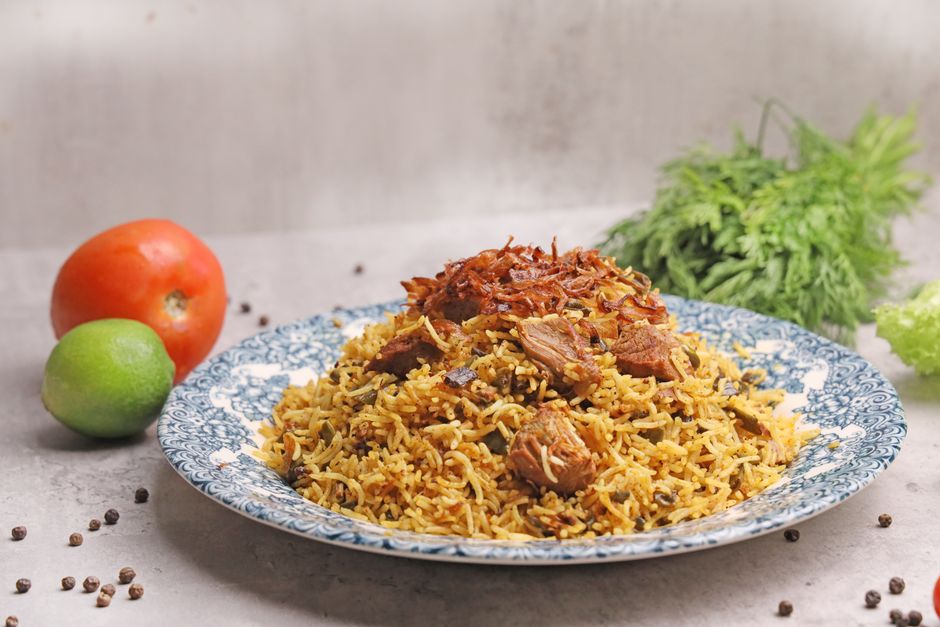
Mutton is the one plate on our board that refuses to be rushed. Goat is a working animal — lean, sinewy, full of connective tissue — and everything about how we cook it is a response to that. This page is about the cut, the time it takes, and why it lands at AED 15 while the chicken stays at AED 10.
The cut: bone-in goat shoulder
We use shoulder, on the bone. It is not the neatest cut and it is not the quickest, but it is the one that rewards a long dum. Shoulder carries the connective tissue that melts into gelatine under slow steam, which is what gives mutton biryani that heavier, glossier quality the leg simply cannot produce. The bone matters just as much: marrow renders into the pot and works down through the rice. Boneless mutton is easier to eat and a thinner thing to taste.
Why mutton takes longer than chicken
Chicken is tender before it goes in the pot. Goat is not. It has to be taken past tough, through the stage where the muscle tightens, and out the other side to where the fibres give way on their own. Hurry that and you get meat that fights the fork; do it properly and it slides off the bone. That is the entire argument for cooking mutton under a sealed lid rather than in an open pan — trapped steam works on the meat from every side at once, at a temperature that never gets violent enough to squeeze it dry.
Same copper deg, same charcoal, same rope of dough sealing the lid as every other biryani we cook — mutton just occupies it for longer. The full explanation of dum is worth reading if you want the method rather than the menu.
Why it’s AED 15 and the chicken is AED 10
No mystery here: goat costs materially more per kilo than chicken, and it occupies a pot for longer, which is its own cost. Five dirhams is roughly what that difference comes to. We would rather move the price than quietly shrink the meat or bulk the plate out with rice — which is the usual way a kitchen keeps a mutton biryani looking like a bargain.
For context on the rest of the board: veg is AED 8, the chicken 10er AED 10, beef AED 12, prawn AED 18, and the Family Dum feeds four for AED 35. Full menu and prices.
Mutton, beef or chicken — which to order
People ask this at the counter constantly, so here is the honest comparison.
| Plate | Price | Order it if… |
|---|---|---|
| Mutton | AED 15 | You want the richest plate we make and you don’t mind bones. |
| Beef | AED 12 | You want deep and heavy — slow-braised until it falls apart at the fork. |
| Chicken (the 10er) | AED 10 | You want the everyday plate at the everyday price. |
How to eat it properly
Two things people miss. First, the bone — the marrow is the best part of the plate and it is not going to come out on its own. Second, the mirchi ka salan: mutton is rich, and that thin, sour, chilli-and-peanut gravy exists precisely to cut through it. Spoon it over the rice rather than leaving it in the pot at the side. The raita is there to cool, the lemon to sharpen. Used together they are a complete plate, which is why they come with it rather than as paid extras.
Halal, and where to get it
All our meat is halal. We don’t serve pork or alcohol, anywhere. You’ll find us across Dubai and the UAE — walk in, take it away hot, or order it on your usual delivery app. For a large order or a mutton-heavy table, message first: it is the plate most likely to need a little notice.
How to order
Message us on WhatsApp, or tap it into your usual delivery app. Tell us how many plates and whether it’s dine-in, takeaway or delivery — that’s the whole order.
Order mutton biryani on WhatsApp
Mutton biryani FAQ
Is your mutton goat or lamb?
Goat — shoulder, on the bone. In the UAE and across South Asia “mutton” conventionally means goat rather than mature sheep, and that is what we cook. It is the leaner, firmer meat of the two, which is exactly why it gets the long dum.
Is the mutton biryani bone-in or boneless?
Bone-in. The marrow renders into the pot during the dum and carries down through the rice, so taking the bone out would cost the plate most of what makes it worth ordering. If you’d rather not work around bones at all, the boneless chicken biryani at AED 12 is the easiest plate on the board to eat.
Why is the mutton AED 15 when the chicken 10er is AED 10?
Goat costs noticeably more per kilo than chicken, and it occupies a pot for far longer. Five dirhams is about what that difference actually comes to. The alternative would be shrinking the meat or padding the plate with rice, and we would rather move the price honestly.
How spicy is it?
The biryani itself is aromatic rather than fiery — the spices are there for depth, not heat. The heat lives in the mirchi ka salan served alongside, so you set the level yourself. Add it by the spoon; leave it in the pot if you would rather not.
More biryani: try the AED 10 chicken biryani (the 10er) or the fully vegetarian veg biryani (AED 8), or read the full FAQ.